
Quick answer
Active fire safety systems are the parts of a building’s fire protection that need to be triggered to work, either automatically or by a person. They detect a fire, raise the alarm or fight it, such as smoke detectors, fire alarms, sprinklers, hose reels and extinguishers. Passive fire safety systems are built into the structure and work all the time without being switched on. They contain fire and smoke to the area where it started, such as fire-rated walls and floors, fire doors and sealed service penetrations. A safe building needs both working together.
Fire protection in a building isn’t one single system. It’s a mix of equipment that springs into action when a fire starts, and construction that quietly holds the fire back from the moment it begins. These two groups are known as active and passive fire safety systems, and every commercial, industrial and strata building in NSW relies on both.
In this guide we explain what active and passive fire safety systems are, the main examples of each, how they work together during a fire, and what building owners need to do to keep them compliant. If you’re looking at the passive side of your building, our passive fire protection services cover fire-rated sealing, barriers and compartmentation across Sydney.
What Are Active and Passive Fire Safety Systems?
The simplest way to tell them apart is to ask one question: does it need to do something when a fire starts?
- Active fire systems respond to a fire. They need a trigger such as heat, smoke or a person, and usually rely on power, water or pressure to work.
- Passive fire systems resist a fire. They are part of the building itself and are always working, with no trigger, power or person needed.
Active systems are about finding a fire early, warning people and putting the fire out or keeping it under control. Passive systems are about slowing the spread of fire and smoke, protecting escape routes and stopping the building’s structure from failing too soon.
What Is Active Fire Protection?
Active fire protection covers any system or piece of equipment that has to be activated to do its job. Some systems activate automatically, while others are operated by occupants or the fire brigade. Common examples include:
- Smoke and heat detectors: sense a fire in its early stages and signal the fire panel.
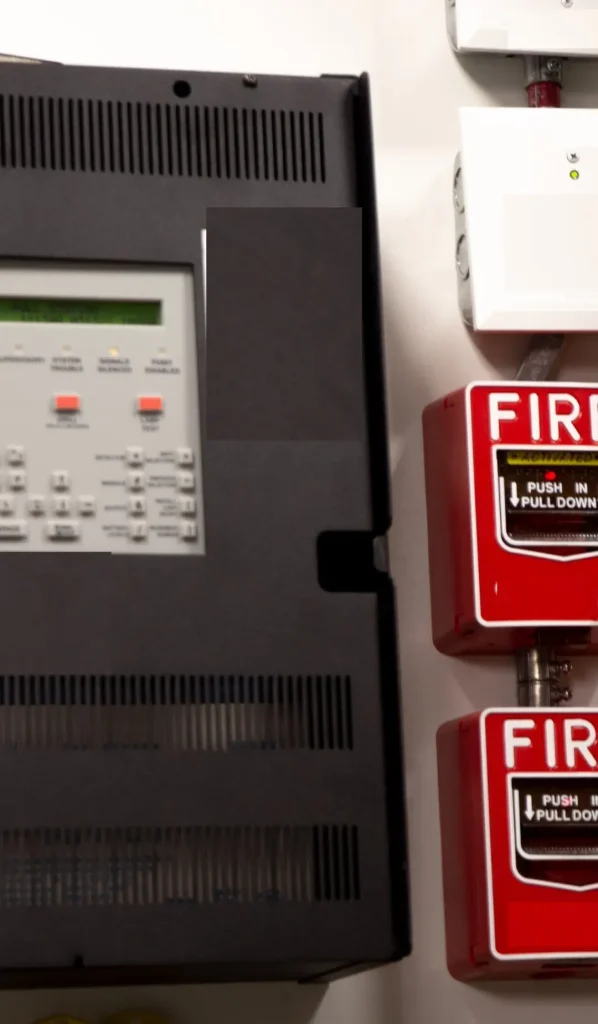
- Fire alarm and occupant warning systems: sound the alarm so people can evacuate, and often alert the fire brigade. Our fire alarm installation team installs panels, detectors and warning devices.
- Sprinkler and suppression systems: release water, gas or foam to control or put out a fire. Our guide on how a dry fire sprinkler system works explains one common type.
- Fire hydrants and hose reels: give the fire brigade and trained occupants a water supply to fight a fire.
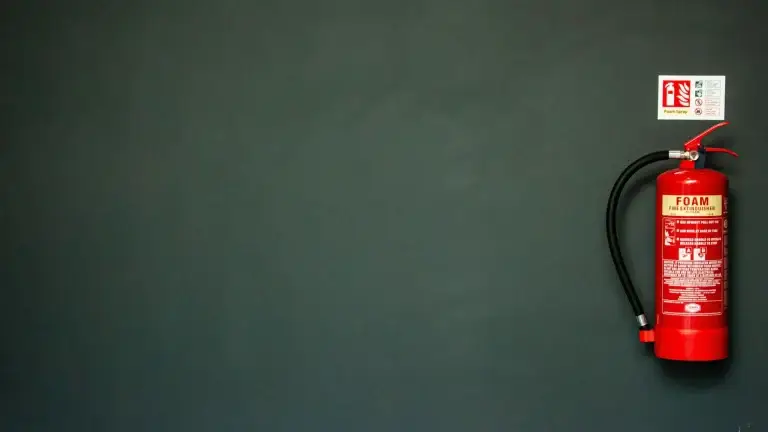
- Portable extinguishers and fire blankets: first-response equipment for small fires, used by people on site.
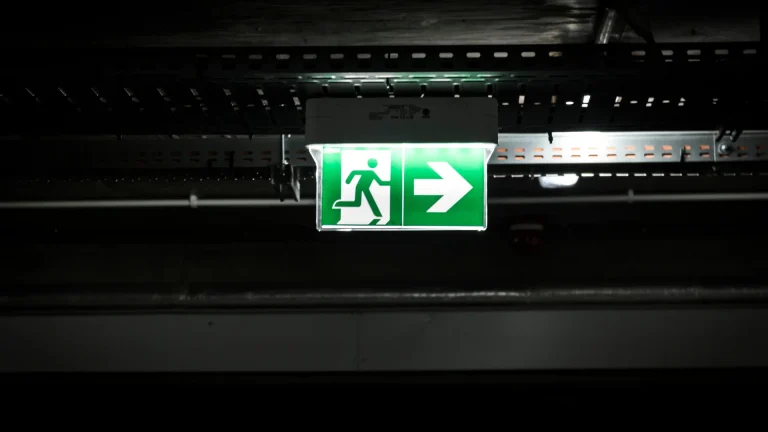
- Emergency lighting and exit signs: switch to battery when the power fails, lighting the way out.
- Smoke control systems: fans and dampers that move or exhaust smoke to keep stairwells and escape routes clear.
Because active systems depend on detectors, power, water pressure and moving parts, they can fail if they aren’t maintained. A flat battery, a closed valve or a blocked extinguisher can stop an active system working at the moment it’s needed.
What Is Passive Fire Protection?
Passive fire protection is built into the structure of a building. Its job is to divide the building into fire-resisting compartments, so a fire and its smoke are held in the area where they started for long enough for people to get out and firefighters to arrive. Common examples include:
- Fire-rated walls, floors and ceilings: form the compartments and protect stairwells and corridors. Our guide to fire barriers explains how these work.
- Fire doors and smoke doors: keep fire and smoke out of escape routes while still letting people through. We supply and complete fire door installations for Sydney buildings.
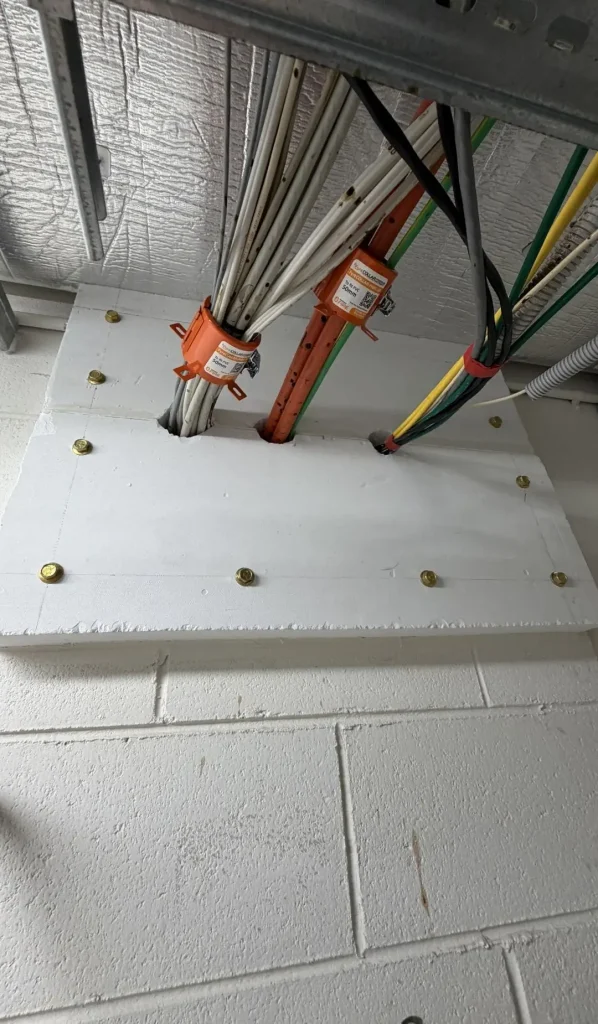
- Penetration seals: fire-rated collars, wraps, sealants and pillows that close the gaps where pipes, cables and ducts pass through a fire-rated wall or floor.
- Fire dampers: close inside air-conditioning ducts to stop fire travelling through the ductwork.
- Fire-resistant coatings and cladding: such as intumescent paint and fire-rated boards that protect steel and other structural elements.
Passive systems have no moving parts to wear out, but they can still be undone. A single unsealed hole for a new cable can let fire and smoke pass straight through a wall that was built to stop it. For a closer look at the passive side on its own, read our guide to what passive fire protection is.
Active vs Passive Fire Safety Systems: The Key Differences
Here is how the two compare side by side.
- Need a trigger to work
- Rely on power, water or pressure
- Detect, warn and fight the fire
- Alert occupants and the fire brigade
- Alarms, sprinklers, hose reels, extinguishers
- Always working, no trigger needed
- Built into the structure
- Contain fire and smoke
- Protect escape routes and structure
- Fire walls, fire doors, seals, dampers
| Active fire systems | Passive fire systems | |
|---|---|---|
| How they work | Respond when a fire is detected or someone uses them | Resist fire all the time as part of the building |
| Main purpose | Detect, warn, control or put out the fire | Contain fire and smoke, protect escape routes and structure |
| Needs power or water? | Usually yes | No |
| Examples | Detectors, alarms, sprinklers, hydrants, hose reels, extinguishers, emergency lights | Fire-rated walls and floors, fire doors, penetration seals, fire dampers, fire-resistant coatings |
| How they fail | Faults, flat batteries, closed valves, missed servicing | Unsealed penetrations, damaged walls, doors wedged open |
How Active and Passive Systems Work Together
Neither type of system is enough on its own. They are designed to overlap, so if one part fails, another is still protecting the people inside. A typical fire plays out like this:
- A fire starts in a storeroom. A smoke detector senses it and the fire panel raises the alarm.
- People are warned and start to leave. The occupant warning system sounds, and emergency lights and exit signs guide them out if the power fails.
- The fire is contained. The storeroom’s fire-rated walls, ceiling and sealed penetrations stop fire and smoke spreading into the corridor.
- Escape routes stay clear. Fire doors close and hold back smoke, keeping the stairwell usable.
- The fire is controlled. A sprinkler head above the fire opens, and firefighters connect to the building’s hydrants.
Some equipment sits right on the line between the two. A fire door held open by a magnetic hold-open device is passive protection, but it relies on the fire alarm system to release it and let it close. That’s why both sides need to be designed, installed and tested with the other in mind.
Which Fire Systems Does Your Building Need?
The fire systems a building needs depend on its size, its classification and how it’s used. The National Construction Code (NCC) sets out which active and passive measures are required, and they are confirmed when the building is designed and certified.
In NSW, the required measures for a building are listed on its fire safety schedule. These are called essential fire safety measures, and they usually include a mix of active and passive systems. Each year, the building owner must provide an Annual Fire Safety Statement (AFSS) confirming that every measure on the schedule has been assessed and is performing to the required standard.
Check your fire safety schedule. It’s the simplest way to see exactly which active and passive systems your building has, and which ones need to be checked before your next AFSS is due.
Maintaining Active and Passive Fire Systems
Both types of system must be maintained, but what that looks like is quite different.
- Active systems are inspected and tested on regular cycles under AS 1851, from monthly and six-monthly checks to yearly and five-yearly tests. That includes alarm panels, detectors, sprinklers, hydrants, hose reels, extinguishers and emergency lighting.
- Passive systems are also covered by AS 1851. Fire doors are checked to make sure they close, latch and seal, and fire-rated walls and penetrations are inspected for damage or new holes that haven’t been sealed.
Passive systems are often the ones that get missed. Every time a trade runs a new cable, pipe or duct through a fire-rated wall or floor, the penetration needs to be sealed with a tested fire-stopping system. Over years of fit-outs and upgrades, unsealed gaps can quietly add up.
Our fire inspection services check both active and passive measures on a set schedule, with clear reports to support your AFSS. Where we find gaps in compartmentation, our team can seal them with certified fire-rated penetration sealing.
Common Mistakes That Weaken Fire Protection
Many of the problems found during inspections are simple, everyday habits that undo the protection a building was designed with:
- Wedging fire doors open for convenience, so they can’t close and hold back smoke.
- Leaving penetrations unsealed after new cabling, plumbing or air-conditioning work.
- Blocking extinguishers, hose reels and exits with stock, furniture or rubbish.
- Leaving alarm zones isolated after maintenance or hot works and forgetting to restore them.
- Relying on one type of protection, such as assuming sprinklers make fire-rated walls and doors less important.
Frequently Asked Questions
Is a fire door active or passive fire protection?
A fire door is passive fire protection. It’s part of the building’s fire-rated construction and holds back fire and smoke without needing power. Some fire doors are held open by magnetic devices that release when the alarm sounds, which links them to the active system.
Are sprinklers active or passive?
Sprinklers are active fire protection. They need heat to open a sprinkler head and a water supply to work, and they act to control or put out the fire.
Is emergency lighting an active fire system?
Yes. Emergency lights and exit signs switch to battery when the normal power fails, so they are active systems. They need regular emergency lighting testing to make sure they stay on for the required time.
Which is more important, active or passive fire protection?
Neither. They do different jobs and are designed to back each other up. Active systems warn people and fight the fire, while passive systems give people the time and safe routes they need to get out.
Do passive fire systems need maintenance?
Yes. Passive systems don’t wear out like machinery, but they can be damaged or breached by building works. Fire doors, fire-rated walls and penetration seals should be inspected regularly and repaired when problems are found.
Active fire safety systems detect, warn and fight a fire, while passive fire safety systems contain it and protect the way out. Every building needs both, kept in good working order. If you’d like your building’s fire systems inspected, or need fire-rated sealing, barriers or fire doors installed, the team at VQS Fire can help.