
Quick answer
To put out an electrical fire, cut the power at the wall or the switchboard if you can reach it without getting close to the flames, then use a carbon dioxide (CO2) or dry powder extinguisher that carries an E rating on its label. Never use water or a foam extinguisher on anything that could still be live. If the fire is bigger than a small bin, is spreading or involves a lithium-ion battery, get everyone out, close the door behind you and call Triple Zero (000).
Electrical fires behave differently from a fire in a pile of paper or a pan of oil. The fuel is plastic insulation, circuit boards and dust sitting on equipment that may still be connected to power, so the thing you would normally reach for can hurt you. A stream of water or foam can carry current straight back to the person holding it, and while the circuit stays energised the fault that started the fire can keep reheating it.
The good news is that most electrical fires start small, at a power board, an appliance or a switchboard, and the first minute decides how they end. Below we walk through exactly how to put one out safely, when a fire blanket is the better tool, why battery fires need a different plan and what to do once the flames are gone.
Why You Should Never Use Water on an Electrical Fire
Water and most water-based extinguishers conduct electricity. If you throw a bucket of water or squeeze a water, foam or wet chemical extinguisher at a live appliance, the stream can form a path from the equipment to your hands and give you a serious electric shock. Fire and Rescue NSW is blunt about it: a water extinguisher must never be used on any fire involving electrical equipment.
Water also does nothing to stop the cause. Until the supply is isolated, a short circuit or overheating connection can keep producing heat, so a fire that seems to be out can flare up again within seconds.
Check the label first. An extinguisher’s rating shows what it is safe on. If the rating printed on it doesn’t end with the letter E, don’t point it at electrical equipment.
How Do You Put Out an Electrical Fire? Step by Step
If you discover a small electrical fire and have a clear way out, work through these steps in order:
- Decide whether it is small enough to fight. Fire and Rescue NSW advises using an extinguisher or blanket only in the first few seconds of a fire, and only if you feel confident. A fire about the size of a small bin, with a clear exit behind you and no smoke filling the room, is the limit.
- Raise the alarm. Shout to warn everyone nearby and have someone call Triple Zero (000) straight away. Don’t wait to see whether you can handle it first.
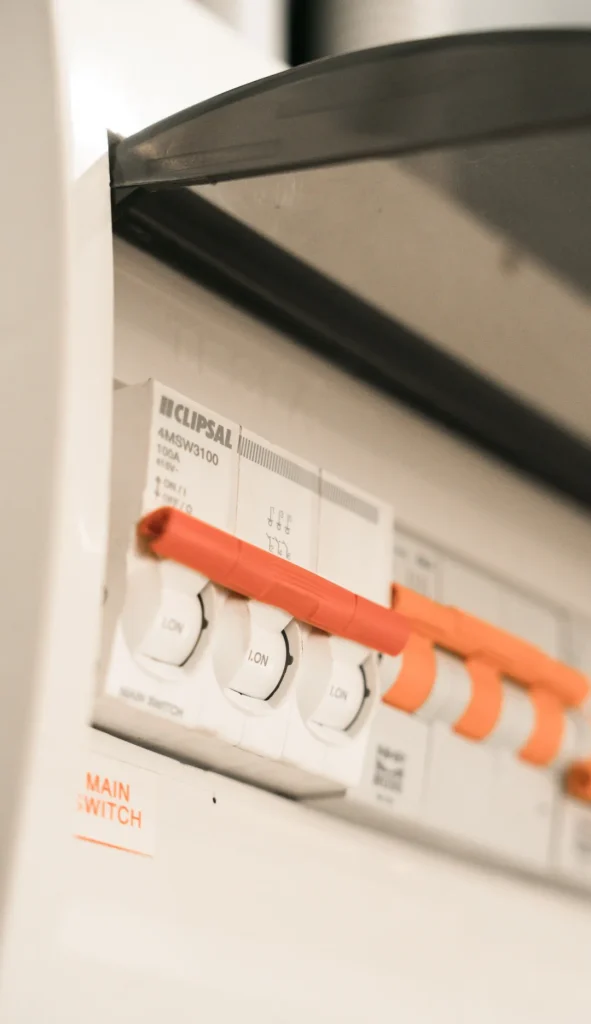
- Cut the power if you can do it safely. If the plug and power point are well clear of the flames, switch off at the wall. Otherwise, go to the switchboard and turn off the main switch. Never pull on a cord that is sparking or melting.
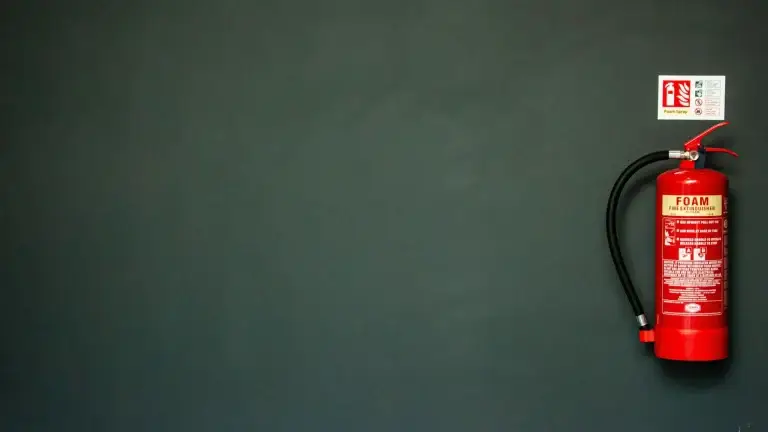
- Grab the right extinguisher. Use a CO2 extinguisher (black band) or an ABE or BE dry powder extinguisher (white band). Our guide to extinguisher classes and colour bands explains what each label means.
- Attack the fire from a safe distance. Pull the pin, stand 2 to 3 metres back with your exit behind you, point the nozzle low at whatever is burning and move it steadily from side to side. Hold a CO2 extinguisher by its handle, not the horn, because the horn gets cold enough to burn skin.
- Watch it closely afterwards. Stay back and keep the extinguisher pointed at the area for a minute or two. If smoke or flames return and the extinguisher is empty, leave.
- Get out if it isn’t working. If the fire grows, the room fills with smoke or your exit is threatened, leave immediately, close the door behind you to slow the spread and wait outside for firefighters.

CO2 or Dry Powder: Which Works Better on Electrical Fires?
Both types are safe to use on live electrical equipment, but each suits different places:
- Pushes oxygen away with a cloud of cold gas
- Leaves no residue behind
- Suits switchboards, comms rooms and office electronics
- Short reach and weak outdoors
- Doesn’t cool the fuel, so a fire can restart once the gas clears
- Coats the fuel and breaks the chemical reaction
- Leaves a fine powder through nearby equipment
- Suits corridors and areas with mixed fire risks
- Also covers paper, timber and flammable liquids
- The powder cloud can make it hard to see
In practice, many buildings use both: CO2 beside switchboards and in comms rooms where powder would ruin the equipment, and ABE dry powder in corridors and common areas where it covers the widest range of fires. Australian Standard AS 2444 sets out how extinguishers are selected and located for these risks, including significant switchboards.
Small Appliance Fires: When a Fire Blanket Is the Better Choice
If a toaster, kettle or other benchtop appliance catches fire, switch it off at the wall or the switchboard first. Once the power is off, a small appliance fire can be smothered with a fire blanket in the same way you would cover a pan fire: pull the tabs to release it, hold it up to shield your hands, lay it over the fire and leave it in place so the heat can die down.
A blanket is a one-use tool and works best on fires you can completely cover. For anything larger, use an extinguisher or get out. If you’re choosing one for a kitchen or staff room, our guide on which fire blanket size to buy covers the common options.
Lithium-Ion Battery Fires Need a Different Plan
E-bikes, e-scooters, power tool batteries, laptops and phones can go into thermal runaway, where the cells heat each other up and release toxic, flammable gases. Fire and Rescue NSW warns that a fire blanket or extinguisher may slow the spread to nearby objects but is not likely to fully extinguish a lithium-ion battery fire.
If a battery or device starts to smoke or flame:
- Evacuate the area and close doors behind you if it’s safe to do so.
- Don’t go back inside for any reason, because the battery gases are toxic.
- Call Triple Zero (000) and wait somewhere safe for firefighters.
- Call even if the smoke or flames stop, as a battery that hasn’t cooled can reignite.
- Never try to carry a burning battery outside.
Watch for the warning signs before it gets that far: swelling or bulging, hissing or popping sounds, a strong chemical smell, leaking fluid or a battery that is too hot to touch.
What Not to Do During an Electrical Fire
- Don’t use water, foam or wet chemical extinguishers on anything that could be live.
- Don’t touch an appliance or power board that is sparking or melting.
- Don’t open a switchboard door if smoke is pouring out of it. Leave isolation to firefighters.
- Don’t stay in a small, closed room after discharging a CO2 extinguisher.
- Don’t turn the power back on once the fire is out.
What to Do After an Electrical Fire Is Out
Call Triple Zero (000) even if you put the fire out yourself. Firefighters can check for heat hidden inside walls, ceilings and switchboards that you can’t see.
Leave the affected circuit, or the whole supply, switched off until a licensed electrician has found and repaired the fault. Turning it back on to see whether it works can restart the fire.
Finally, deal with the extinguisher you used. Even a short burst empties some of the charge, so a used extinguisher shouldn’t go back on its bracket. Our fire extinguisher testing team can replace it with a new unit and record the change in your building’s maintenance log.
How to Lower the Risk of an Electrical Fire
Most electrical fires come down to overloaded circuits, damaged leads and equipment that is past its best. A few habits make a big difference:
- Use power boards with overload protection and never plug one power board into another.
- Replace leads and plugs that are cracked, scorched or hot to the touch.
- Keep switchboard cupboards clear of stored boxes, paper and cleaning products.
- Charge batteries on a hard surface away from exits, and never overnight or while you’re out.
- Have a licensed electrician investigate any breaker that keeps tripping.
- Keep a properly rated CO2 or dry powder extinguisher, bought from a reputable supplier, within easy reach of switchboards and equipment, and have it inspected every six months.
For workplaces and strata buildings, getting extinguisher placement right is part of the building’s fire safety. Our fire equipment installation service matches each extinguisher to the hazard beside it and mounts it with clear signage, and our fire equipment inspections keep everything tagged and ready.
Frequently Asked Questions
Can you put out an electrical fire with water?
No. Water conducts electricity, so spraying it on live wiring or appliances can give you a fatal shock and may spread the fire. Use a CO2 or dry powder extinguisher with an E rating, or a fire blanket on a small appliance once the power is off.
Is it safe to use a fire blanket on an electrical fire?
Yes, for a small fire you can fully cover, such as a toaster or kettle on a bench, once the power has been switched off. Leave the blanket in place so the fire can’t restart, and call 000 so firefighters can check it.
Should you call 000 if you have already put the fire out?
Yes. Electrical fires can keep smouldering inside walls, ceilings and equipment after the visible flames are gone. Firefighters can check for hidden heat and make the area safe.
Can an electrical fire start again after it’s out?
It can. If the power is still on, the fault that caused it can reheat the area, and a CO2 extinguisher doesn’t cool the fuel once the gas disperses. Keep the power off and stay alert until firefighters or an electrician have checked it.
What should I do if a phone or e-bike battery catches fire?
Get out, close the door behind you if it’s safe and call Triple Zero (000). Fire and Rescue NSW advises that extinguishers and blankets are unlikely to fully put out a lithium-ion battery fire, and the gases it gives off are toxic.
So, how do you put out an electrical fire? Isolate the power if you safely can, reach for an extinguisher with an E rating such as CO2 or dry powder, and never use water. Above all, know your limit: if the fire is growing or a battery is involved, get out and let firefighters handle it. If you’d like the right extinguishers placed beside your switchboards and equipment, VQS Fire can recommend, supply and mount them for you.