Quick answer
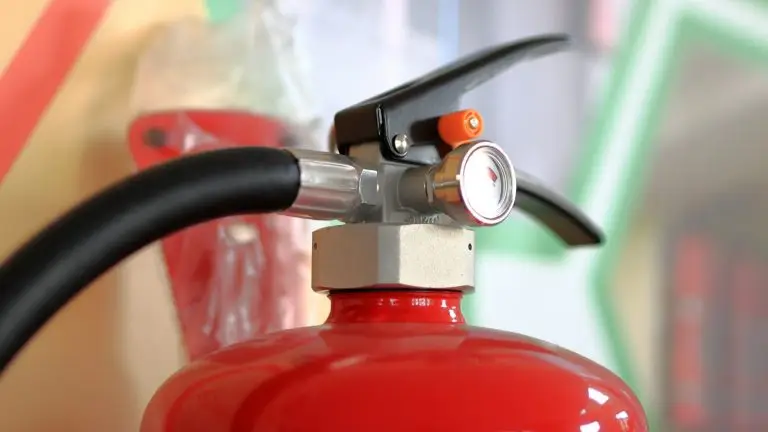
A fire extinguisher class is a letter (A, B, C, D, E or F) that describes the type of fuel a fire is burning. In Australia, every portable extinguisher is labelled with the classes it is rated to fight, so you can match it to the fire risks in each part of your building. Using an extinguisher on a class it isn’t rated for can spread the fire or put you in danger.
Every fire needs three things to keep burning: fuel, heat and oxygen. Take one away and the fire goes out. The trouble is that different fuels behave very differently. Burning paper, a pan of cooking oil and a smoking switchboard all need a different approach, and the wrong extinguisher can turn a small fire into a serious one.
That is why Australian extinguishers are classified by the type of fire they can safely put out. In this guide we explain the six fire classes, what the coloured bands on extinguishers mean, how to choose the right mix for your property, and what you need to do to keep them compliant. If you would rather have a professional assess your site, our fire extinguisher testing team can check, tag and recommend everything in one visit.
What Does a Fire Extinguisher Class Mean?
A fire class groups fires by what is burning. Australian Standard AS 2444, which covers the selection and location of portable fire extinguishers and fire blankets, uses six classes labelled A to F. Each extinguisher is tested against these classes and its label shows which ones it is suitable for.
You will often see a rating such as 3A:40B:E printed on the label. The letters are the classes the extinguisher can be used on. The numbers show its relative firefighting capacity for that class, so a higher number means it can handle a larger fire of that type. A class shown with no number, like the E above, simply means the extinguisher is safe and suitable to use on that type of fire.
If a class isn’t shown on the label, don’t use that extinguisher on that type of fire.
The Six Fire Classes in Australia
Here is a quick overview of each class, followed by a closer look at the risks you are likely to find in Australian homes and workplaces.
Class A: Ordinary Combustibles
Class A fires involve everyday solid materials such as timber, paper, cardboard, textiles, furniture and many plastics. They are the most common type of fire in offices, warehouses, schools and homes. Water, foam, wet chemical and ABE dry powder extinguishers are all rated for Class A.
Class B: Flammable and Combustible Liquids
Class B covers liquids such as petrol, diesel, kerosene, oil-based paints, thinners and solvents. These fires spread quickly across the surface of the liquid, and spraying water on them can splash burning fuel around. Foam smothers the surface, while dry chemical powder interrupts the chemical reaction.
Class C: Flammable Gases
Class C fires involve gases such as LPG, natural gas and acetylene. The safest response is to shut off the gas supply first, if you can do so without putting yourself at risk. Extinguishing a gas flame while the gas is still flowing can let unburnt gas build up and reignite. ABE and BE dry powder extinguishers are rated for Class C.
Class D: Combustible Metals
Metals such as magnesium, titanium, sodium and fine aluminium swarf burn at extremely high temperatures and can react violently with water. These fires need a specialist Class D powder extinguisher designed for the specific metal involved.
Class E: Electrical Fires
Class E refers to fires involving energised electrical equipment, from switchboards and server racks to kitchen appliances. Never use water or foam, because both conduct electricity back to the person holding the extinguisher. Carbon dioxide (CO2) and dry powder are both suitable, and CO2 is popular in server rooms because it leaves no residue.
Class F: Cooking Oils and Fats
Cooking oil fires burn far hotter than most Class B liquids and can reignite even after the flames appear to be out. A wet chemical extinguisher cools the oil and forms a soapy layer over the surface that stops oxygen getting in. A fire blanket is the other main option for small pan fires. Every commercial kitchen should have both, and they should be checked regularly as part of regular fire blanket checks and extinguisher servicing.
Safety tip: never throw water on a cooking oil fire. The water instantly turns to steam and can throw burning oil across the room. Turn off the heat if it is safe to do so, then use a fire blanket or a wet chemical extinguisher.
Extinguisher Types and Their Colour Bands
All portable fire extinguishers in Australia have a red body. A coloured band near the top tells you what is inside, which helps you grab the right one quickly in an emergency.
Class A
Classes A, F
Classes A, B
A, B, C, E or B, C, E
Class E, limited B
| Type | Colour band | Rated classes | Best used for |
|---|---|---|---|
| Water | All red | A | Paper, timber and fabric. Not for electrical, oil or liquid fires. |
| Wet chemical | Oatmeal | A, F | Commercial kitchens and deep fryers. |
| Foam | Blue | A, B | Flammable liquid stores and workshops. |
| Dry powder (ABE or BE) | White | A, B, C, E (ABE) or B, C, E (BE) | General use in offices, warehouses, strata common areas and vehicles. |
| Carbon dioxide | Black | E (limited B) | Server rooms, switchboards and electronics, as it leaves no residue. |
The ABE dry powder extinguisher is the most common type in Australia because it covers the widest range of everyday risks. Its main drawbacks are that it doesn’t cover Class F cooking fires, and the fine powder makes a mess and can damage sensitive electronics. That is why most buildings need a combination of extinguisher types rather than just one.
Which Extinguisher Does Your Building Need?
The best approach is to look at the fire risks in each area, not the building as a whole. Here is how that typically plays out:
- Offices, corridors and common areas: an ABE dry powder extinguisher covers the general Class A risks plus electrical equipment.
- Server rooms and switchboards: a CO2 extinguisher for Class E fires without leaving residue on equipment.
- Kitchens and staff rooms with cooking appliances: a wet chemical extinguisher and a fire blanket for Class F.
- Workshops, garages and fuel stores: foam or dry powder for flammable liquids.
- Areas with gas cylinders or LPG: ABE or BE dry powder, with a clearly marked gas isolation point.
- Homes: a small ABE dry powder extinguisher and a fire blanket in or near the kitchen is a sensible minimum.
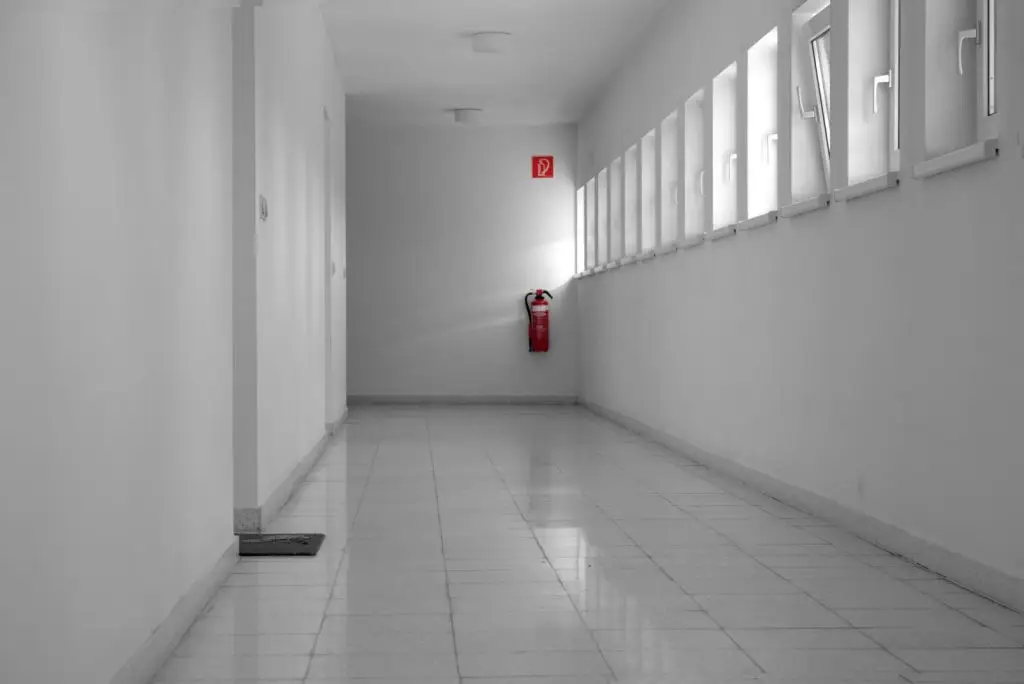
Location matters as much as type. Under AS 2444, extinguishers should be mounted close to the hazard and along exit paths, with clear signage, so people don’t have to go looking for one. They should be mounted so the handle sits no higher than about 1.2 metres from the floor, making them easy to reach. In commercial buildings, the type, number and position of extinguishers will also depend on your building’s fire safety measures and approvals.
If you’re fitting out a new site or changing how a space is used, our team can map your risks and install the right fire equipment, from extinguishers and blankets to signage, in the correct locations.
How to Use a Fire Extinguisher
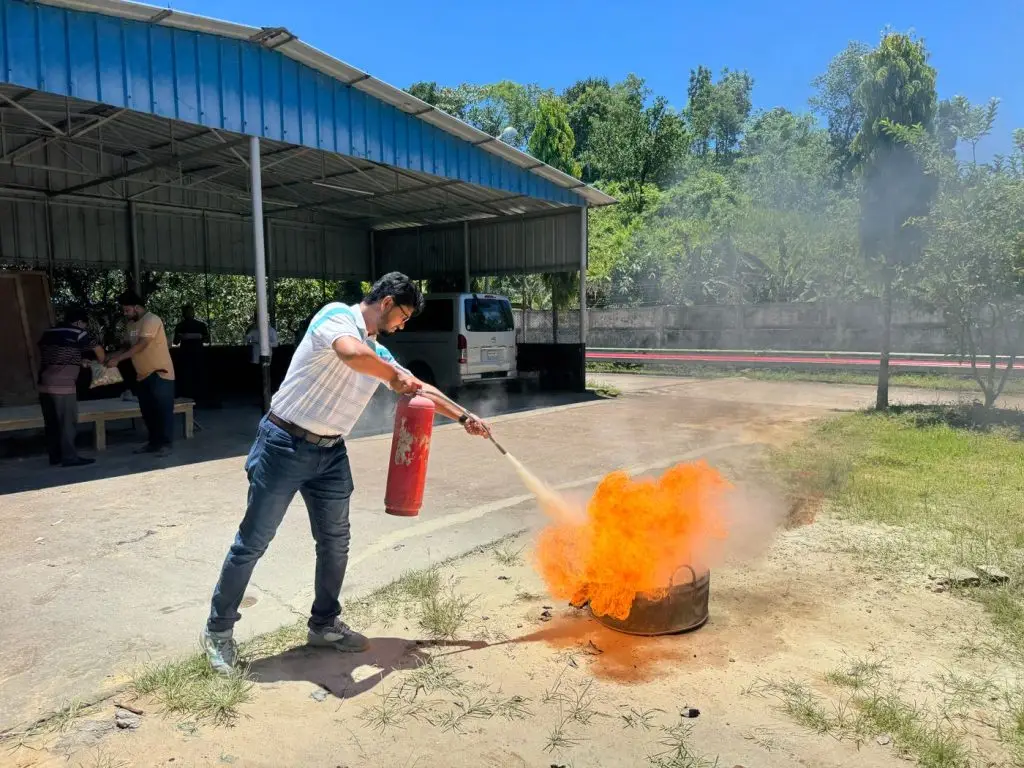
Portable extinguishers are designed for small fires in their early stages. If a fire is spreading, producing heavy smoke, or blocking your exit, leave the building and call Triple Zero (000). If it is small and you have a clear way out, follow these steps:
- Pull the pin. Break the tamper seal and pull out the safety pin, keeping the nozzle pointed away from you.
- Aim at the base of the fire. Stand a few metres back and aim the hose or nozzle at the base of the flames, not the top.
- Squeeze the handle. Squeeze slowly and evenly to release the extinguishing agent.
- Sweep from side to side. Move the nozzle across the base of the fire until it is out, then watch for any sign of it reigniting.
Even if you put the fire out, call 000 and let the fire brigade check it, especially for electrical, gas and cooking oil fires that can reignite. Then have the used extinguisher replaced or recharged straight away, because a partly used extinguisher may not work the next time you need it.
Keeping Your Fire Extinguishers Compliant
An extinguisher only helps if it works when you need it. Australian Standard AS 1851 sets out how fire protection equipment is maintained, and it requires portable fire extinguishers to be inspected and tested every six months. During each visit a technician checks:
- That the extinguisher is in its correct location, visible and unobstructed.
- The pressure gauge, safety pin, tamper seal and operating instructions.
- The body, hose and nozzle for damage, corrosion or blockages.
- The weight or contents, to confirm it hasn’t been discharged.
- Signage and mounting, followed by a new service tag and a record in your logbook.
Extinguishers also need more thorough servicing, pressure testing and recharging at the longer intervals set by AS 1851 for each type. For commercial and strata buildings in NSW, these records support your Annual Fire Safety Statement, so missing a service can create a compliance problem as well as a safety one.
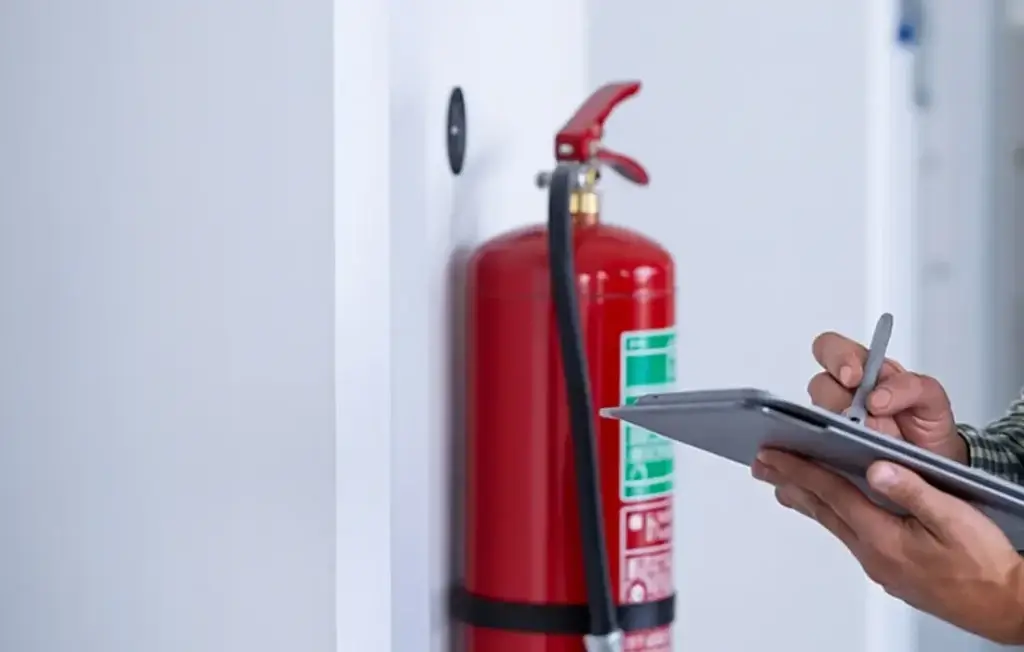
Our routine equipment inspections cover extinguishers alongside hose reels, fire blankets and exit signage, so all of your portable equipment is checked and recorded at the same time. We service buildings right across Sydney, from Parramatta to the Northern Beaches.
Frequently Asked Questions
Can one fire extinguisher cover every class of fire?
No. An ABE dry powder extinguisher covers the widest range (Classes A, B, C and E), but it isn’t suitable for cooking oil fires (Class F) or metal fires (Class D). Most buildings need at least two types of extinguisher.
What is the most common fire extinguisher in Australia?
The ABE dry chemical powder extinguisher, identified by its white band. It is suitable for most offices, warehouses, strata common areas and vehicles.
What extinguisher should I use on an electrical fire?
Use a CO2 or dry powder extinguisher rated for Class E. Never use water or foam. If you can safely switch off the power at the switchboard, do so first.
How often do fire extinguishers need to be tested?
Under AS 1851, portable fire extinguishers must be inspected and tested every six months, with more detailed servicing and pressure testing at longer intervals depending on the extinguisher type.
Is a fire blanket better than an extinguisher for kitchen fires?
For a small pan or fryer fire, a fire blanket is often the quickest and simplest option. Commercial kitchens should have both a fire blanket and a wet chemical extinguisher, as larger oil fires need the cooling effect of wet chemical.
Choosing the right fire extinguisher comes down to understanding what could burn in each part of your building. Match the class to the risk, mount extinguishers where people can reach them, and keep them serviced every six months. If you’re not sure what your property needs, the team at VQS Fire can assess your site and recommend a compliant setup.