
Quick answer
Yes. In NSW, almost every building other than a standalone house must have its fire safety measures assessed and certified every year. The owner then lodges an Annual Fire Safety Statement (AFSS) with the local council and Fire and Rescue NSW. Once a year is only the minimum, though. Under AS 1851, most fire equipment also needs routine servicing every month or every six months, and those service records are what the annual assessment relies on.
If you own or manage a commercial building, a strata block or a workplace in NSW, an annual fire inspection isn’t optional. It’s a legal requirement tied to your building’s fire safety schedule, and there are fines if the paperwork is late. Many owners are still unsure exactly what is required, who can do it and how it fits with the regular testing their fire contractor already carries out.
In this guide we explain when annual fire inspections are required, which buildings they apply to, how often each type of fire equipment needs to be checked and what happens if you fall behind. If you’d rather hand it over to a team that handles it every day, our fire inspection services cover AS 1851 testing and reporting for buildings across Sydney.
Are Annual Fire Inspections Required in NSW?
Annual fire inspections are required under the Environmental Planning and Assessment (Development Certification and Fire Safety) Regulation 2021. Every building with essential fire safety measures has a fire safety schedule, which lists each measure and the standard it must meet. Once a year, the building owner must confirm that every measure on that schedule is still working as it should.
That confirmation is the Annual Fire Safety Statement. To issue one, the building owner must:
- Have every measure assessed by an accredited practitioner (fire safety), who confirms it performs to the standard on the fire safety schedule.
- Issue the statement on time, within 12 months of the previous one, using an assessment carried out in the three months before the statement date.
- Lodge a copy with the local council and with Fire and Rescue NSW, together with the current fire safety schedule.
- Display a copy of the statement and the fire safety schedule in a prominent place inside the building.
The responsibility sits with the building owner. For a strata building, that means the owners corporation, usually through its strata manager. Councils are clear that owners shouldn’t wait for a reminder letter before booking their annual assessment.
Which Buildings Need an Annual Fire Safety Inspection?
The AFSS applies to buildings classified as Class 1b to Class 9 under the National Construction Code. In everyday terms, that covers most buildings that aren’t a single house:
- Residential apartment buildings and strata blocks, including mixed-use buildings with shops below.
- Offices, shops and shopping centres, from a single tenancy to a large retail complex.
- Warehouses, factories and workshops, along with storage facilities and car parks.
- Hotels, boarding houses and backpacker accommodation.
- Schools, childcare centres, aged care and health care buildings.
Standalone houses (Class 1a) don’t need an annual fire safety statement. They still need working smoke alarms by law, and our residential fire protection team can help with those. Be careful with townhouses and terraces, though. Shared basements, common walls or connected roof spaces can change a building’s classification and bring it under the annual requirements.
Not sure if your building is included? Look for a fire safety schedule in your development consent or certification documents, or check the copy displayed in your building. If your building has one, it needs an annual fire safety statement.
Annual Fire Safety Statement vs Routine Servicing
A common misunderstanding is that a building only needs one fire inspection a year. In reality, the annual statement and routine servicing are two separate things that work together.
- Required once every 12 months
- Covers every measure on the schedule
- Assessed by an accredited practitioner
- Lodged with council and FRNSW
- Proves the building is compliant
- Monthly, six-monthly, yearly and longer
- Each item serviced on its own schedule
- Carried out by fire technicians
- Recorded in logbooks and on tags
- Keeps equipment working all year
AS 1851 is the Australian Standard for routine servicing of fire protection systems and equipment. It sets out what needs to be inspected, tested and maintained, and how often. When the accredited practitioner assesses your building for the AFSS, the logbooks, tags and test results from that routine servicing are a key part of the evidence. If servicing has been missed during the year, the measures can’t be shown to be performing, and the statement can’t be signed off with confidence.
How Often Does Fire Equipment Need to Be Inspected?
Each type of equipment has its own service intervals under AS 1851. The exact tasks depend on the equipment, but the pattern looks like this:
Here’s what that means for the most common equipment in Sydney buildings:
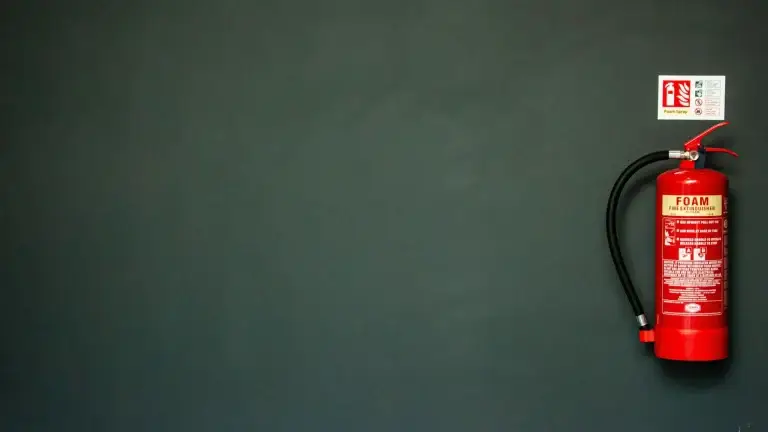
- Portable fire extinguishers: inspected and tagged every six months, with extra yearly checks for some types and a pressure test every five years. Our extinguisher testing and tagging covers every type, and our guide on whether fire extinguishers expire explains the five-yearly test in detail.
- Fire hose reels: checked every six months for water flow, leaks, hose condition and access, with a more thorough yearly service. See our fire hose reel testing page for what’s included.
- Fire blankets: inspected every six months to confirm they’re in place, accessible and undamaged, as part of our fire blanket inspections.
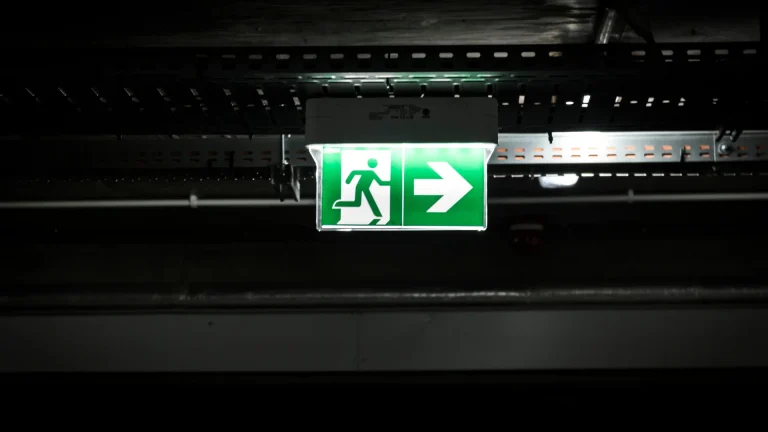
- Emergency and exit lighting: AS 1851 refers emergency lighting to AS/NZS 2293.2, which calls for a discharge test of at least 90 minutes every six months. We carry out emergency and exit light testing to that standard.
- Fire alarm and detection systems: tested monthly, six-monthly and yearly, from panel and battery checks to testing detectors and warning devices.
- Sprinklers, hydrants and pumps: monthly pump runs and valve checks, with flow and pressure testing at longer intervals. Our fire equipment inspection service covers these water-based systems.
- Fire doors and passive measures: fire doors are checked for closing, latching, seals and hardware, and fire-rated walls and penetrations are inspected for damage. Our guide to active and passive fire safety systems explains why both sides need regular checks.
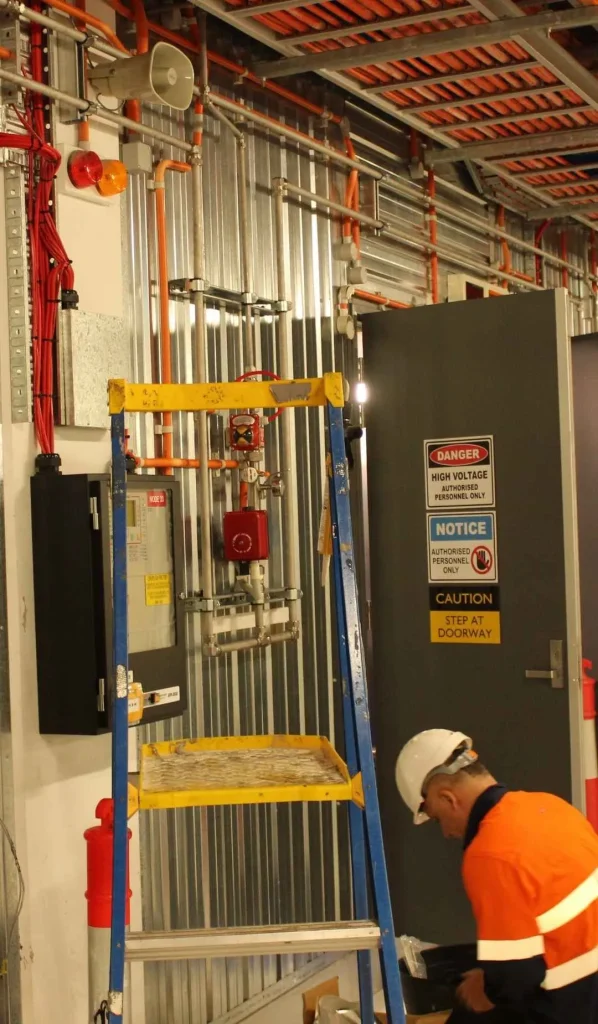
What Happens If You Miss Your Annual Fire Inspection?
Missing the annual statement has real consequences, and councils actively follow up overdue buildings.
- Escalating fines: councils can issue penalty notices for a late AFSS, and the amount climbs the longer it stays overdue. Several Sydney councils start at $1,000 for a statement one week late, with the penalty increasing each week after that.
- Orders and prosecution: councils can issue fire safety orders requiring work to be done, and serious or ongoing breaches can end up in court, where penalties are far higher.
- Problems with insurers and buyers: missing fire safety records can raise questions from insurers after an incident, and from buyers and tenants during a sale or lease.
- Equipment that fails when it’s needed: the biggest risk of all. A flat emergency light battery, a closed sprinkler valve or a fire door that won’t close can cost lives.
What Happens During an Annual Fire Safety Inspection?
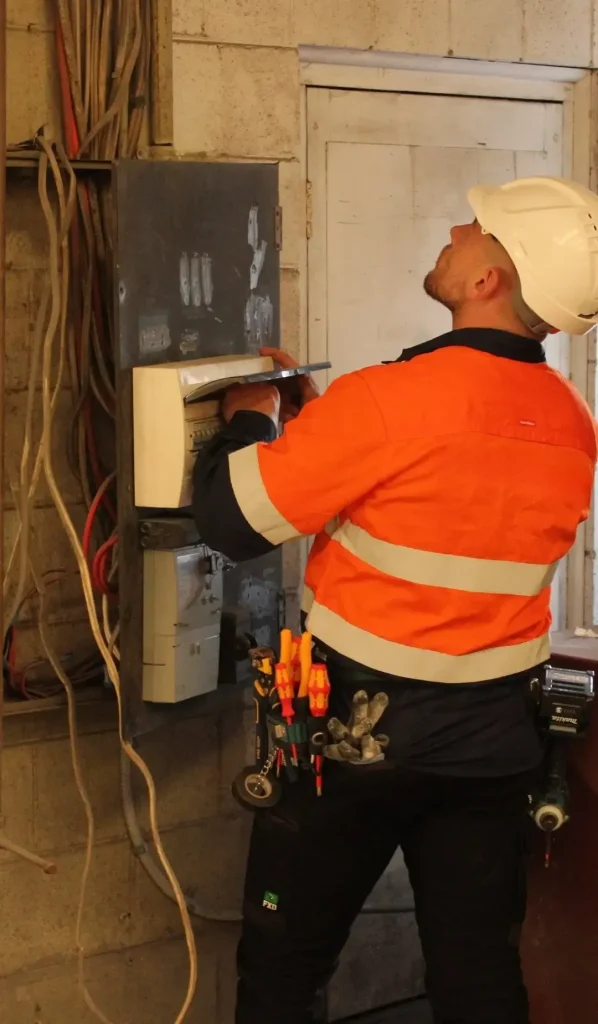
Most annual fire inspections follow the same steps, from reviewing your paperwork through to lodging the statement:
- Review the fire safety schedule. Every measure listed is identified on site, along with its standard of performance and service history.
- Inspect and test the equipment. Technicians work through each system, from extinguishers and hose reels to alarms, exit lights and fire doors, following AS 1851 checklists.
- Report and fix defects. Anything faulty, expired or missing is recorded and repaired or replaced so the measure meets its standard again.
- Assess and sign the statement. An accredited practitioner (fire safety) assesses the measures, and the owner signs the AFSS.
- Lodge and display. The statement goes to the council and Fire and Rescue NSW, and a copy is displayed in the building.
The smoother the year has been, the easier this process is. When equipment has been serviced on schedule and defects have been fixed as they’re found, the annual assessment becomes a check rather than a scramble.
How to Stay Compliant All Year
A few simple habits make annual compliance far less stressful:
- Diarise your AFSS due date and book the assessment well inside the three-month window before it.
- Keep service logbooks on site and up to date, so records are easy to find at assessment time.
- Fix defects as soon as they’re reported, rather than leaving them until the annual statement is due.
- Keep exits and equipment clear, and never wedge fire doors open.
- Use one contractor for all measures, so every item on the schedule is serviced and recorded in one place.
For strata buildings, many managers also require contractors to hold CM3 prequalification before they can attend site. VQS Fire is CM3 certified, which you can see along with our other accreditations and memberships, so our technicians can be approved for your building without delay.
Frequently Asked Questions
Do houses need an annual fire inspection?
No. Standalone houses (Class 1a) don’t need an annual fire safety statement in NSW. They must still have working smoke alarms, which should be tested regularly and replaced when they reach the end of their life.
Who can carry out the annual fire safety assessment?
The assessment for an annual fire safety statement must be carried out by an accredited practitioner (fire safety), who holds accreditation for the types of measures being assessed. The owner then signs the statement.
Is one fire inspection a year enough?
Not usually. The annual statement is required once a year, but AS 1851 requires most equipment to be serviced more often, such as every month or every six months. Those routine services keep equipment working and provide the records needed for the annual assessment.
What is a supplementary fire safety statement?
Some buildings have critical fire safety measures that must be assessed more often than once a year. These are listed on the fire safety schedule, and each extra assessment is certified with a supplementary fire safety statement.
Can I do my own fire safety inspections?
Building owners and staff can carry out simple visual checks, such as making sure exits are clear and extinguishers are in place. Routine servicing under AS 1851 should be done by trained fire technicians, and the AFSS assessment must be completed by an accredited practitioner.
So, are annual fire inspections required? For almost every NSW building other than a house, yes, and the routine servicing that supports them happens throughout the year. If you’d like your building’s fire safety measures inspected, tested and documented ahead of your next annual statement, the team at VQS Fire can help.