
Quick answer
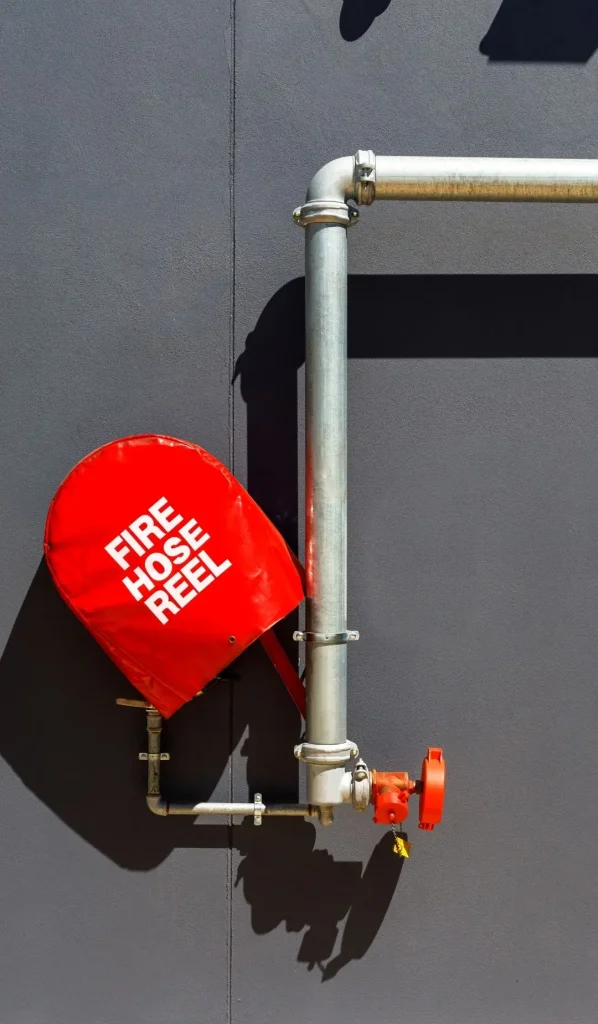
A fire hose reel is connected to a building’s water supply through a stop valve. When the valve is opened, water flows through the centre of the reel and into the hose, which can then be pulled towards the fire. The person using it opens the nozzle and aims at the base of the flames. Hose reels are for fires in ordinary materials such as paper, timber and fabric, and must not be used on electrical or flammable liquid fires.
Fire hose reels are a familiar sight in commercial buildings, car parks and warehouses, but most people walk past them without ever seeing one used. It’s worth knowing how they work before there’s a reason to pull one off the wall.
In this guide we explain how a fire hose reel works, its main parts, how to use one safely and when a building needs them. If you look after a building with hose reels, our fire hose reel testing team works with properties across Sydney.
What Is a Fire Hose Reel?
A fire hose reel is a length of hose stored on a wall-mounted drum and permanently connected to a water supply. It gives trained occupants a steady stream of water to tackle a fire early, before it grows too big to control. It’s part of a building’s first response, along with extinguishers and fire blankets, as our guide to types of fire protection equipment explains.
The Main Parts of a Fire Hose Reel
Every fire hose reel has four main parts:
How Does a Fire Hose Reel Work?
A fire hose reel is a simple system, and that’s part of why it’s reliable. Here’s what happens from start to finish:
- Water waits at the valve. The reel is plumbed into the building’s water supply, so water is held behind the stop valve and ready to go.
- The valve is opened. Turning the stop valve on lets water through to the reel. Some reels have an automatic valve that opens when the hose is pulled.
- Water fills the hose. It flows through the centre of the reel and into the hose. A swivel joint lets the drum turn while the water is on.
- The hose is pulled out. The drum turns and the hose follows the person towards the fire. Because the hose stays round, water still flows if only part of it has been unrolled.
- The nozzle releases the water. Opening the nozzle starts the flow, and closing it stops the flow without going back to the valve.
Where Does the Water Come From?
Most hose reels are fed from the mains water supply, and they’re generally designed to deliver at least 0.33 litres of water per second. If the mains pressure isn’t high enough, a building may use a pump to boost it. Unlike an extinguisher, a hose reel won’t run out after a few seconds, so it can keep supplying water for as long as the supply is available.

How to Use a Fire Hose Reel
Only use a hose reel if the fire is small, you’ve been trained or feel confident, and you have a clear way out. Then follow these steps:
- Raise the alarm. Make sure the alarm has been raised and the fire brigade has been called on triple zero (000).
- Check the fire type. Don’t use water on electrical, cooking oil or flammable liquid fires.
- Open the stop valve. Turn the valve on before you walk away from the reel, unless it’s an automatic model.
- Pull out the hose. Take it towards the fire, keeping your exit behind you.
- Open the nozzle and aim low. Direct the water at the base of the flames and sweep across the burning material.
- Leave if it isn’t working. If the fire keeps growing, drop the hose and get out. Don’t put yourself at risk.
It isn’t a wash-down hose. Hose reels are sometimes used for cleaning bins or hosing down car parks. This can wear the equipment, leave the hose out of place and hide a fault until it’s needed in an emergency.
Fire Hose Reel vs Fire Hydrant
The two are often mixed up, but they have different jobs and different users:
- Used by building occupants
- Hose stays connected and ready
- Usually a 19 mm hose up to 36 m long
- For small fires in ordinary materials
- Installed to AS 2441
- Designed for firefighters
- Larger hoses are connected when needed
- Supplies far more water
- For serious fires in and around a building
- Installed to AS 2419.1
When Does a Building Need Fire Hose Reels?
The National Construction Code generally requires a hose reel system to serve the whole building where internal hydrants are installed. Where they aren’t, it applies to any fire compartment with a floor area over 500 square metres. Some building types are treated differently, including Class 2 and 3 apartment buildings and Class 5 offices, although existing buildings of these types may still have hose reels.
For an existing building, the fire safety schedule is the best place to check, as it lists each measure required. These standards cover the rest:
| Standard | What it covers |
|---|---|
| AS 1221 | The design, construction and performance of the hose reels themselves |
| AS 2441 | Where hose reels are located and how they’re installed |
| AS 1851 | Routine inspection, testing and maintenance |
If your building needs new reels or more coverage, we can help with the supply and installation of fire equipment.
How Fire Hose Reels Are Maintained
A hose reel needs to work the first time, every time. Under AS 1851, reels are checked every six months for water flow, leaks, hose condition and access, with a more thorough service each year. Our fire equipment inspection service can cover hose reels in the same visit as your other equipment, and those records support your annual fire safety requirements. Between services, look out for these common problems:
- Blocked access: stock, bins or furniture stored in front of the reel.
- Leaks: water dripping from the valve, hose or nozzle.
- Damage: a cracked or perished hose, or a missing or broken nozzle.
- Stiff parts: a stop valve that won’t turn or a drum that won’t spin freely.
- Missing signs: a reel that people can’t find quickly, or an out-of-date service tag.
Frequently Asked Questions
Is there always water in a fire hose reel?
Water is always available at the stop valve. On most manual reels, the hose itself only fills when the valve is opened.
How long is a fire hose reel?
Most fire hose reels in Australia have a 36 metre hose that’s 19 mm wide, although other lengths are available.
Can you use a fire hose reel on an electrical fire?
No. Water conducts electricity, so a hose reel must not be used on electrical fires. It also shouldn’t be used on cooking oil or flammable liquid fires. Our guide to fire extinguisher classes explains what to use instead.
Who can use a fire hose reel?
They’re designed for building occupants, and training is strongly recommended. Only use one if the fire is small and you have a clear way out.
What should happen after a hose reel is used?
Turn off the nozzle and stop valve once it’s safe, and tell the person responsible for the building. Have the reel checked and rewound properly so it’s ready to use again.
So, how does a fire hose reel work? Opening the valve sends water through the reel and into the hose, and the nozzle puts it exactly where it’s needed. To make sure yours will work when it counts, the team at VQS Fire can inspect, test and install hose reels across Sydney.