
Quick answer
There’s no such thing as a truly fireproof door. Every door will eventually fail in a fire, so “fireproof” is really just an everyday word, not a rating. A fire rated door, usually just called a fire door, has been tested to AS 1530.4 and built to AS 1905.1 so it holds back fire for a set time. That time is shown by its Fire Resistance Level (FRL), such as -/60/30. In Australian buildings, “fire rated” is the term that counts for compliance.
If you’re replacing a door in a stairwell, fitting out a commercial tenancy or managing a strata building, you’ll hear the words fireproof, fire resistant and fire rated used as if they mean the same thing. They don’t. Choosing a door that only sounds safe can leave a gap in your building’s fire protection and cause problems at your next inspection.
In this guide we explain what’s the difference between fireproof and fire rated doors, what a fire rating like -/60/30 actually means, how fire doors compare with smoke doors and bushfire doors, and how to tell whether the door in front of you is the real thing. If you need certified doorsets fitted, our fire door installation team works with buildings across Sydney.
Is There Such a Thing as a Fireproof Door?
No. A fireproof door would need to survive any fire, for any length of time, without letting flames, smoke or heat through. No door can do that. Steel warps, glass cracks, seals burn away and timber chars, given enough time and heat.
When people say “fireproof door”, they usually mean one of three things:
- A genuine fire door that has been tested and certified, described loosely as fireproof.
- A heavy or solid door, such as a steel or solid core timber door, that looks like it would stop a fire but has never been tested as a fire door.
- A door marketed as “fire resistant”, often because of the materials used, without a tested fire rating for the complete doorset.
Only the first one counts in a building that needs a fire door. A door can be made from non-combustible materials and still fail quickly if the frame, hinges, gaps or seals aren’t part of a tested system. That’s why Australian standards don’t talk about fireproof doors at all. They talk about fire rated doorsets with a proven performance period.
What Is a Fire Rated Door?
A fire rated door is a complete doorset that has passed a standard furnace test under AS 1530.4 and is manufactured and installed to AS 1905.1. The rating applies to the whole assembly, not just the door leaf. A compliant fire door includes:
- A tested door leaf with a fire resistant core, built to the manufacturer’s tested design.
- A matching fire rated frame, fixed into a fire rated wall so the opening keeps its rating.
- Approved hardware, including hinges, latches, closers and any panic bars, that were tested or assessed with that door.
- Seals and correct gaps around the leaf, so fire and smoke can’t push through the edges.
- A compliance tag on the door leaf and frame showing the manufacturer, the standard and the FRL.
Change any one of those parts with something untested and the door may no longer meet its rating, even if it still looks the same.
- Not a recognised rating
- Usually untested as a doorset
- No FRL or compliance tag
- Can’t be certified for a fire safety schedule
- Performance in a fire is unknown
- Tested to AS 1530.4
- Built and installed to AS 1905.1
- Has a stated FRL, such as -/60/30
- Tagged on the leaf and frame
- Accepted for compliance and inspections
What Does a Fire Rating Like -/60/30 Mean?
Every fire rated door has a Fire Resistance Level, written as three numbers in minutes. Each number relates to a different test criterion:
Under the National Construction Code, -/60/30 is the most common requirement for fire doors in stairwells, corridors and apartment entries. Doors in fire walls and some higher-risk areas need a higher rating, such as -/120/30. The required FRL for each opening is set by the building’s design and approvals, so a replacement door must match or exceed the original rating.
Fire Rated Doors vs Smoke Doors vs Bushfire Doors
Fire doors are often confused with two other types of door that do different jobs:
- Fire rated doors hold back fire, smoke and heat for the period on their FRL. They’re used where a door passes through a fire rated wall, such as into a fire-isolated stairwell.
- Smoke doors are designed to stop smoke spreading along corridors and between areas. They must close automatically and seal well, but they don’t have an FRL and aren’t a substitute for a fire door where one is required.
- Bushfire (BAL) doors are external doors for homes in bushfire-prone areas, built to resist embers and radiant heat under AS 3959. They protect a house from an approaching bushfire and are a different product from the internal fire doors used in commercial and apartment buildings.
Where Are Fire Rated Doors Required?
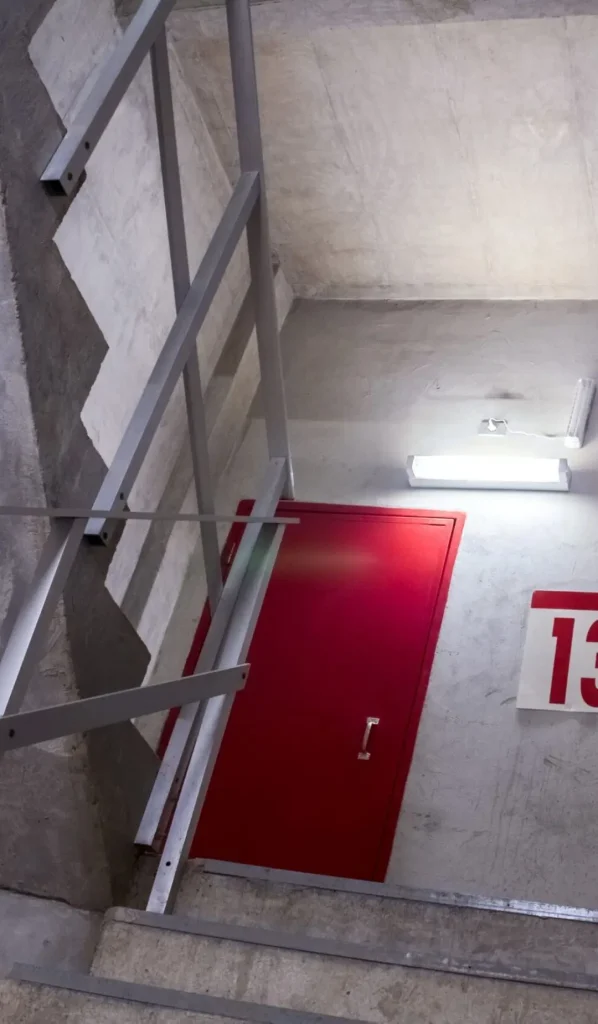
Fire rated doors are needed wherever a doorway passes through a wall that’s designed to contain fire. They let people move through the building while keeping each fire compartment sealed. Common locations include:
- Fire-isolated stairwells and passageways, so the escape route stays usable during a fire.
- Apartment entry doors in many strata buildings, where each unit opens onto a common corridor or stair.
- Plant rooms, switch rooms and service risers, where a fire is more likely to start.
- Openings in fire walls that divide a building into separate fire compartments.
- Lift lobbies, car park connections and other openings shown on the building’s fire safety plans.
Fire doors are one part of the wider passive fire protection system, working alongside fire rated walls, floors and sealed penetrations. Our guide to fire barriers explains how those compartments fit together. Most standalone houses don’t need internal fire doors, although homes in bushfire-prone areas may need BAL-rated external doors.
How to Tell If a Door Is Fire Rated
You can’t tell a fire door by looks alone, but a quick check will usually tell you whether a door is genuine and still doing its job:
- Find the compliance tag. Look for a small metal tag on the hinge edge of the door leaf and another on the frame. It should show the manufacturer, AS 1905.1 and the FRL, such as -/60/30.
- Check it closes by itself. Open the door fully and let go. It should close completely without being pushed.
- Check it latches. Once closed, the door should latch firmly and stay shut when you push on it.
- Look at the edges and seals. Gaps should be small and even, with any smoke seals or intumescent strips intact and unpainted.
- Look for changes. Holes from old locks, added peepholes, cat flaps, kick plates or replaced hardware can all affect the rating if they weren’t approved for that door.
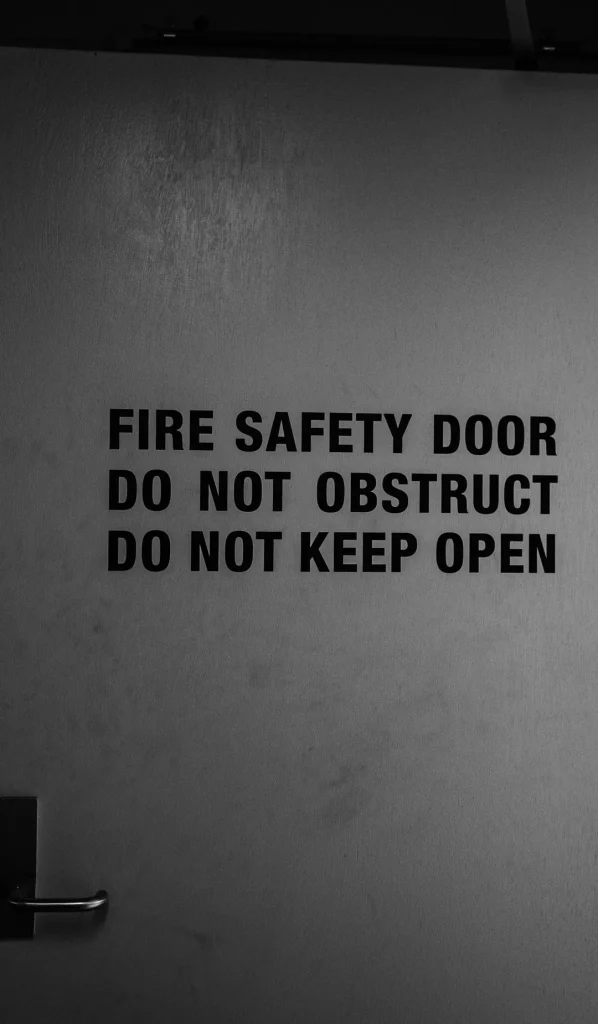
Never wedge a fire door open. A propped door offers no protection at all. If a door needs to stay open for everyday use, it must be fitted with an approved hold-open device that releases the door automatically when the fire alarm activates.
Keeping Fire Rated Doors Compliant
Installing a certified door is only the start. Fire doors take a lot of daily wear, and closers, latches and seals wear out over time. Under AS 1851, fire and smoke doors are inspected every six months and given a more detailed yearly check, covering operation, hardware, seals, gaps and signage. Our fire safety inspections include these checks, with clear reporting on any defects.
Fire doors are also listed on most buildings’ fire safety schedules, so their condition feeds directly into the yearly sign-off. Our guide on annual fire inspections explains how that statement works. When a door fails, repairs should use compatible tested components. If a door has been heavily modified or damaged, replacing the whole doorset is often the only way to restore its rating.
Frequently Asked Questions
Are steel doors fireproof?
No. A steel door isn’t fireproof, and it isn’t a fire door unless it has been tested and certified as a complete doorset. Untested steel doors can warp in a fire and pull away from the frame, letting fire and smoke through.
Is a solid core door the same as a fire door?
No. Solid core doors are heavier and slow fire better than hollow doors, but they don’t have an FRL or a compliance tag. Where the building requires a fire door, a solid core door is not an acceptable substitute.
How long does a fire rated door last in a fire?
A fire rated door is designed to perform for the period shown on its FRL. A -/60/30 door, for example, maintains integrity for 60 minutes and insulation for 30 minutes in a standard test. Real fires vary, which is why the door must be well maintained to perform as tested.
Can you paint a fire rated door?
In most cases you can paint the door leaf and frame, but never paint over the compliance tags, smoke seals or intumescent strips. Check the manufacturer’s guidance first, and avoid adding thick coatings or claddings that weren’t part of the tested design.
Can I add a peephole or new lock to a fire door?
Only if the hardware is approved for that specific door. Drilling or cutting a fire door with untested hardware can void its rating. If you need a change, ask a fire door specialist to confirm the options for your doorset.
So, what’s the difference between fireproof and fire rated doors? A fireproof door doesn’t exist, while a fire rated door is a tested, tagged doorset with a proven FRL. If you’re unsure whether the doors in your building are compliant, or you need certified fire doors supplied and installed, the team at VQS Fire can help.