Quick answer
Fire extinguishers don’t have a printed “use by” date like food, but they don’t last forever. In Australia, an extinguisher stays in service only while it keeps passing its maintenance under AS 1851: an inspection every six months, extra checks for some types each year, and a full empty, pressure test and refill every five years. If it fails any of those checks, has been used, or is damaged, it needs to be recharged or replaced.
Most people only think about their fire extinguisher when they notice it sitting in a corner, covered in dust, with a service tag from years ago. It’s a fair question to ask whether it would still work. The short answer is that extinguishers wear out in ways you can’t always see, which is why Australian Standards focus on regular servicing rather than a single expiry date.
In this guide we explain how long fire extinguishers last, what happens at each service, how to check yours in under a minute, and the signs that mean it’s time for a replacement. If you’d like a professional to look over your extinguishers, our fire extinguisher testing team can inspect, tag and record every unit on site.
Do Fire Extinguishers Actually Expire?
Not in the way a carton of milk does. You won’t find an “expires on” date stamped on most Australian extinguishers. What you will find is a manufacture date and a service tag, and together they tell you far more about whether an extinguisher can be relied on.
The extinguishing agent itself rarely goes off. The problem is everything around it. Over time an extinguisher can slowly lose pressure, seals and O-rings can perish, dry powder can settle and compact at the bottom of the cylinder, and the cylinder itself can corrode or be damaged. Any of these can mean the extinguisher fails to discharge properly at the moment you need it.
That is why the real question isn’t “has it expired?” but “has it been serviced, and did it pass?”
How Long Do Fire Extinguishers Last?
There is no single number. A well-made, rechargeable extinguisher that is kept indoors, serviced on schedule and never damaged can stay in service for many years. One that lives in a hot ute tray, a damp plant room or a busy warehouse may need replacing much sooner.
How long an extinguisher lasts mainly comes down to:
- Whether it’s rechargeable: rechargeable units can be emptied, tested and refilled, while disposable units are designed to be replaced rather than serviced.
- The environment: heat, moisture, salt air and vibration all speed up wear on seals, valves and cylinders.
- Physical damage: dents, corrosion and damaged hoses can make a unit unsafe to use or to pressure test.
- Servicing history: an extinguisher that has missed services may have problems nobody has noticed.
The manufacture date is usually printed on the label or stamped into the cylinder near the base or shoulder. Your technician uses it to work out when the next pressure test is due.
How Often Do Fire Extinguishers Need Servicing?
Australian Standard AS 1851 sets out the routine service of fire protection equipment, including portable fire extinguishers. Servicing works on a cycle, with more thorough checks at longer intervals.
| When | What happens | Who does it |
|---|---|---|
| Every six months | Visual inspection, pressure or weight check, seal and pin check, service tag updated | A qualified fire technician |
| Yearly | Additional tasks for some extinguisher types, as set out in AS 1851 | A qualified fire technician |
| Every five years | Emptied, pressure tested and refilled, or replaced | A qualified fire technician |
| After any use | Recharged or replaced, even if only partly discharged | A qualified fire technician |
| Monthly (recommended) | Quick visual check of the gauge, pin and location | You or your staff |
For commercial and strata buildings in NSW, these service records also support your Annual Fire Safety Statement. A missed service isn’t only a safety risk, it can also leave a gap in your compliance paperwork.
Used it once? Get it recharged. An extinguisher that has been partly discharged, even for a second, may lose the rest of its pressure over the following days. It needs to be recharged or replaced straight away.
How to Check if Your Fire Extinguisher Is Still OK
You don’t need any tools to do a quick check between professional services. Take a minute once a month to look over each extinguisher:
- Look at the pressure gauge. On stored-pressure extinguishers, the needle should sit in the green zone. If it’s in the red on either side, the unit needs servicing.
- Check the pin and tamper seal. The safety pin should be in place and the plastic seal unbroken. A broken seal can mean someone has used it.
- Read the service tag. The tag should show a service within the last six months. An old or missing tag means it’s overdue.
- Inspect the body and hose. Look for dents, rust, cracks in the hose, a blocked nozzle or a faded, unreadable label.
- Make sure it’s easy to reach. It should be on its bracket, visible, with clear signage and nothing stacked in front of it.
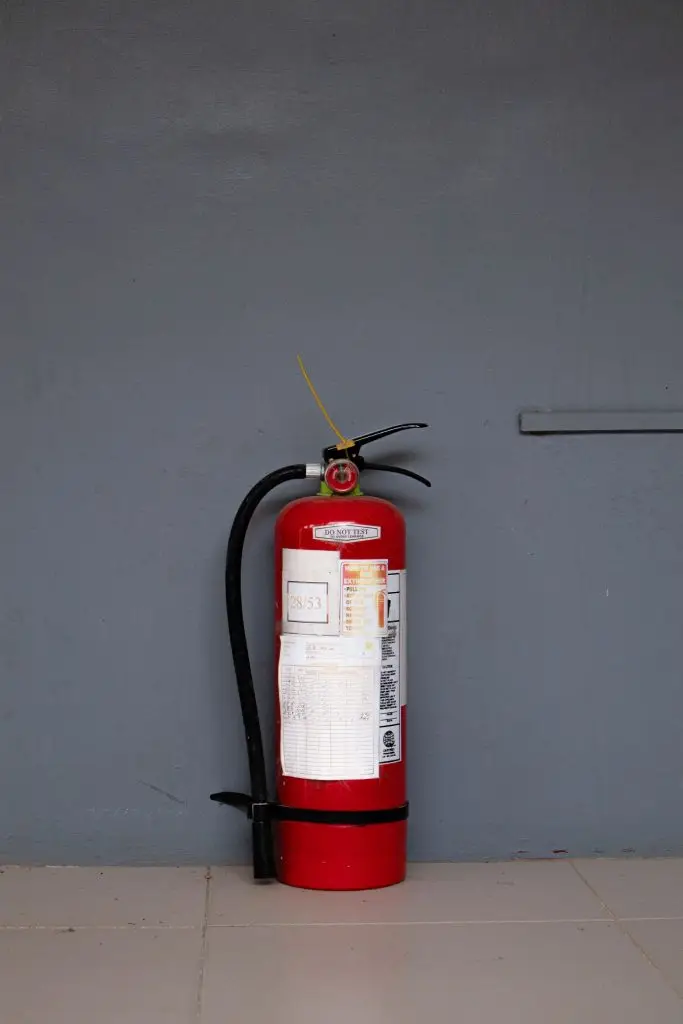
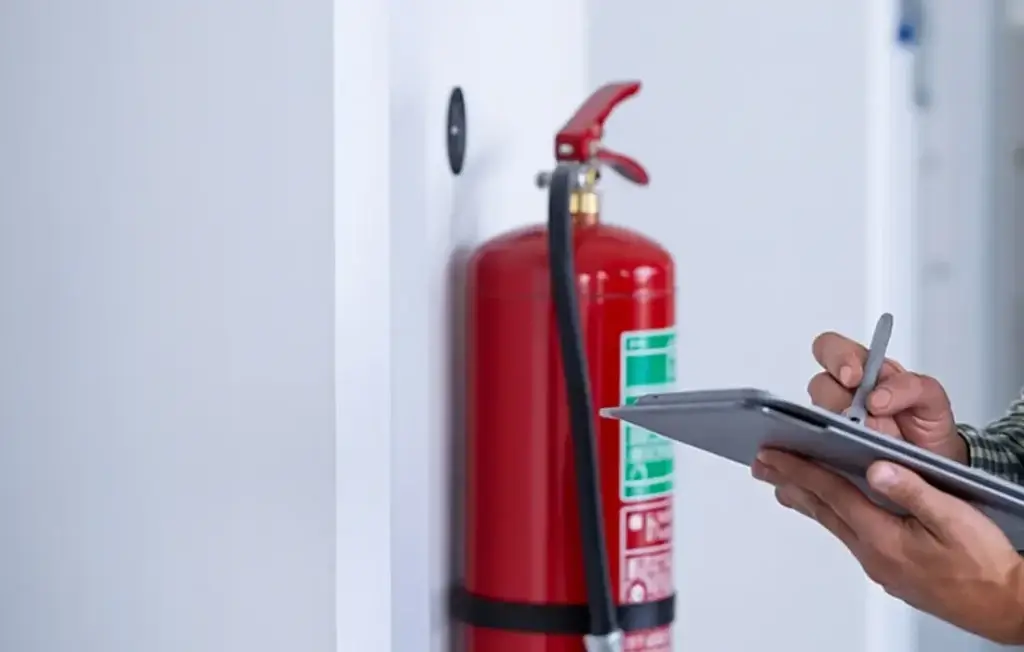
Carbon dioxide (CO2) extinguishers don’t have a pressure gauge, so they are checked by weight during servicing. If you’re unsure about any extinguisher, it’s better to have it looked at than to assume it’s fine.
Signs Your Fire Extinguisher Needs Replacing
Some problems can be fixed with a recharge or new parts. Others mean the extinguisher should be taken out of service and replaced. Replace an extinguisher if:
- It fails its five-yearly pressure test.
- The cylinder is dented, corroded, cracked or has been exposed to fire.
- It’s a disposable unit that has been used or has lost pressure.
- The label and operating instructions can no longer be read.
- It’s an older type that no longer meets current standards, or it’s the wrong class for the fire risk where it’s installed.
If you’re replacing extinguishers, it’s a good time to make sure you have the right type in each area. Our guide to fire extinguisher classes explains which extinguisher suits which fire risk, and our team can supply and install replacement extinguishers with the correct brackets and signage.
What About Fire Extinguishers at Home?
Many homes have a small extinguisher in the kitchen or garage, and these are often forgotten for years. While a house may not have the same formal servicing obligations as a commercial building, the same wear and tear applies.
- Do the monthly check above, paying close attention to the gauge.
- Follow the manufacturer’s instructions for servicing or replacement, which are printed on the label.
- Replace small disposable extinguishers once they’ve been used or the gauge drops out of the green.
- Keep a fire blanket in the kitchen as well, as it’s often the simplest option for a small cooking fire.
Strata buildings are different. Extinguishers in common areas must be serviced to AS 1851, and owners corporations should have them checked along with hose reels and fire blankets. Our routine equipment inspections cover all of these in one visit, and we look after strata buildings across Sydney, including the Northern Beaches and North Shore.
How to Dispose of an Old Fire Extinguisher
Don’t put old extinguishers in your household bin or recycling. They may still be under pressure and contain chemicals that shouldn’t go to landfill. Instead:
- Ask your fire services provider to take it away when they install the replacement.
- Check with your local council about chemical or hazardous waste drop-off days.
- Never try to empty, cut open or puncture an extinguisher yourself.
Frequently Asked Questions
Is there an expiry date on a fire extinguisher?
Most Australian extinguishers don’t have an expiry date. Instead they have a manufacture date and a service tag. Whether an extinguisher can stay in service depends on passing its regular AS 1851 inspections and its five-yearly pressure test.
How often should fire extinguishers be tagged?
Every six months. Each inspection is recorded on the extinguisher’s service tag, along with the date and the technician’s details.
Can an old fire extinguisher still work?
It might, but you can’t be sure without a proper check. Lost pressure, perished seals and compacted powder aren’t always visible from the outside, which is why regular servicing matters.
What does it mean if the gauge needle is in the red?
The extinguisher is either undercharged or overcharged and may not work properly. Take it out of service and have it checked by a fire technician.
Do fire blankets expire too?
Fire blankets don’t have a set expiry date, but they should be inspected regularly and replaced if they’ve been used, damaged or can’t be pulled out easily. We can have your fire blankets checked at the same visit as your extinguishers.
Fire extinguishers don’t come with a simple expiry date, but they do wear out. Keep an eye on the gauge and tag, have them serviced every six months, and replace any unit that fails a check. If you’d like your extinguishers inspected or replaced, the team at VQS Fire can help.