Quick answer
A dry fire sprinkler system keeps its pipes filled with pressurised air or nitrogen instead of water. Water waits behind a special valve, called a dry pipe valve. When heat from a fire opens a sprinkler head, the air escapes, the pressure drops and the valve opens. Water then flows through the pipes and out of any sprinkler heads that have opened. Dry systems are used where water in the pipes could freeze, such as cold rooms and freezer stores.
Most people picture a sprinkler system as pipes full of water, ready to spray the moment a fire starts. That is how the most common type, a wet pipe system, works. But in some parts of a building, keeping water in the pipes all the time causes problems, and that is where a dry fire sprinkler system comes in.
In this guide we explain how a dry fire sprinkler system works step by step, the main parts involved, how it compares with wet and pre-action systems, and what it takes to keep one working. If you are planning sprinklers for a new project, our team can help with fire sprinkler and suppression system installation across Sydney.
What Is a Dry Fire Sprinkler System?
A dry fire sprinkler system, often called a dry pipe sprinkler system, is an automatic sprinkler system where the pipework above the protected area holds compressed air or nitrogen rather than water. The water supply is still connected, but it is held back at a control point by a dry pipe valve until the system is needed.
The sprinkler heads themselves are the same idea as in a wet system. Each head is sealed by a small heat-sensitive glass bulb or fusible link. Nothing happens until a head gets hot enough to open. The difference is what is sitting behind that head when it opens: air first, then water.
In Australia, automatic sprinkler systems are designed and installed to AS 2118.1, and maintained to AS 1851. Dry pipe systems are covered by the same standards, with extra rules because of the way they operate.
How Does a Dry Fire Sprinkler System Work?
A dry system works in a short chain of events. Here is what happens from the moment a fire starts:
- The system sits ready under pressure. An air compressor or nitrogen generator keeps the pipes at a set pressure. That pressure holds the clapper inside the dry pipe valve shut, keeping water out of the pipework.
- Heat opens a sprinkler head. Hot gases from a fire rise to the ceiling. When the glass bulb in the nearest sprinkler reaches its rated temperature, the liquid inside expands, the bulb breaks and the head opens. A standard red bulb is rated at around 68°C.
- Air escapes and pressure drops. With the head open, the compressed air starts rushing out. The pressure in the pipes falls.
- The dry pipe valve trips. Once the air pressure falls far enough, it can no longer hold the valve shut against the water pressure underneath. The valve opens, or “trips”, and water rushes into the pipework.
- Water reaches the open heads. Water pushes the remaining air out ahead of it and travels to the sprinkler heads that have opened. Only those heads discharge. The rest stay shut unless the heat reaches them too.
- The alarm is raised. As water flows, a pressure switch or flow switch signals the fire alarm system, and a water motor alarm bell may sound outside. In many buildings the alarm is also sent to the fire brigade.
The key difference from a wet system is that short delay. Air has to escape before water can arrive, so a dry system takes longer to start spraying. Design standards limit how long that delay can be, which is why larger dry systems are fitted with devices that speed the valve up.
The Main Parts of a Dry Pipe Sprinkler System
A dry system has a few parts that a wet system doesn’t need. Each one plays a role in holding water back until it’s needed, then getting it to the fire as quickly as possible.
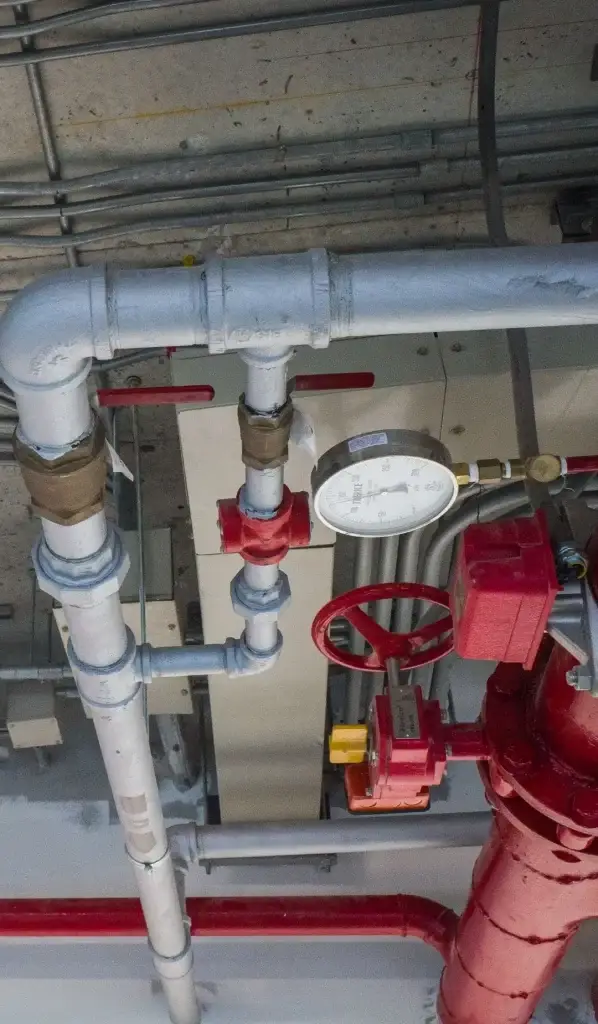
- Dry pipe valve: the heart of the system. It uses a clapper held shut by air pressure, and opens when that pressure drops.
- Air compressor or nitrogen supply: keeps the pipework at the right pressure and tops it up to cover small leaks. Nitrogen is often used because it reduces corrosion inside the pipes.
- Accelerator: a device that senses the first drop in air pressure and helps the dry pipe valve open sooner, cutting the delay before water flows.
- Pitched pipework and drains: pipes are installed on a slight slope with drain points at low spots, so water can be drained out after a test or activation and doesn’t sit in the pipes.
- Sprinkler heads: usually upright heads that sit above the pipe. Where a head has to hang down into a cold area, special dry pendent heads stop water being trapped in the drop.
- Alarm devices: pressure switches, flow switches and a water motor alarm bell that tell occupants and the fire brigade the system has operated.
Wet vs Dry vs Pre-Action Sprinkler Systems
Dry systems are one of several sprinkler types. The right choice depends on the building, the temperature of the space and what is stored there.
- Pipes always full of water
- Water sprays as soon as a head opens
- Simplest design with the fewest parts
- Not suitable where pipes could freeze
- Most common in offices, shops and apartments
- Pipes full of pressurised air or nitrogen
- Short delay while air escapes
- Extra parts: dry pipe valve, compressor, accelerator
- Suitable for freezing or very cold spaces
- Common in cold rooms and freezer stores
| System type | What’s in the pipes | What makes water flow | Typical use |
|---|---|---|---|
| Wet pipe | Water | A sprinkler head opening | Most heated buildings |
| Dry pipe | Pressurised air or nitrogen | A head opening, then the dry pipe valve tripping | Cold rooms, freezers, unheated areas |
| Pre-action | Air (sometimes supervised) | A smoke or heat detector first, and in some designs a head opening as well | Data centres, archives, museums |
| Deluge | Nothing, heads are open | A detection system opening the main valve | High-hazard industrial areas |
Pre-action systems are often confused with dry systems because their pipes are also dry. The difference is that a pre-action system needs a separate detection system to open its valve. That extra step reduces the chance of water being released by accident, which is why pre-action is popular in rooms full of sensitive equipment. These systems link closely with fire alarm and detection systems, so the two are usually designed together.
Where Are Dry Sprinkler Systems Used?
The main reason to choose a dry system is to stop water freezing in the pipes. Frozen water expands, which can crack pipes and fittings, block the flow of water in a fire and cause flooding when it thaws. In Australia, that makes dry systems most common in:
- Cold rooms, freezer stores and refrigerated warehouses
- Food processing and cold chain distribution centres
- Unheated loading docks, car parks and roof spaces in colder regions
- Areas fed from a heated building where only part of the system is exposed to the cold
Not a fit everywhere. Because of the delay and the extra parts, a dry system is not usually chosen for a normal heated office or apartment building in Sydney. A wet system is simpler and responds faster. Dry systems earn their place where cold is a genuine risk.
Dry Sprinkler Systems vs “Dry Fire” Systems
The word “dry” causes a lot of confusion in the fire industry. A dry fire sprinkler system still uses water to put out a fire. It is called dry only because the pipes are empty while the system is waiting.
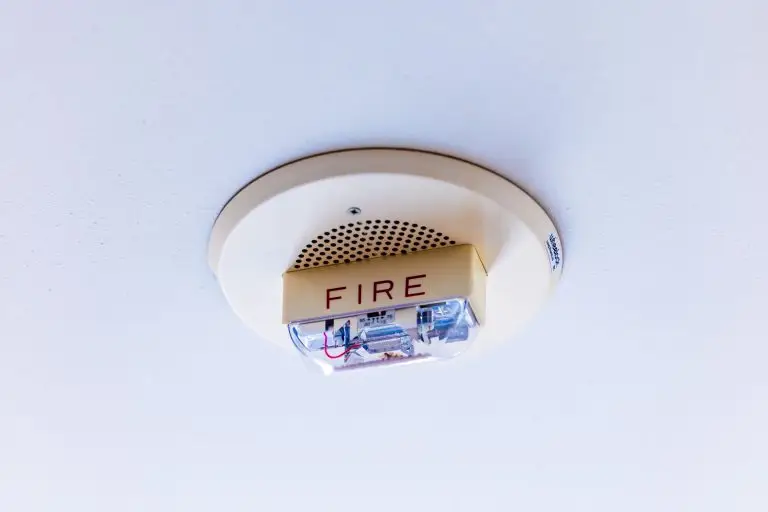
In Australia, fire protection is also commonly split into “wet” and “dry” services. Wet services are the water-based systems: sprinklers, hydrants and hose reels. Dry fire services are the systems that don’t use water at all, such as smoke and heat detection, fire alarm panels and occupant warning systems. So a dry pipe sprinkler system is actually a wet fire service, even though its name says dry.
Most buildings need both. Detection and warning give people early notice to get out, while sprinklers control the fire itself. VQS Fire supplies and installs dry fire systems for Sydney buildings, including detection, alarm panels and warning devices, alongside water-based suppression where the building needs it.
Pros and Cons of a Dry Fire Sprinkler System
Dry systems solve a real problem, but they come with trade-offs that are worth understanding before you choose one.
Advantages:
- Protects spaces where a wet system would freeze
- Lower risk of water damage from a cracked or knocked pipe, since there is no water in the pipework day to day
- Can protect a cold area from a supply in a heated part of the building
Disadvantages:
- A short delay before water reaches the fire
- More parts to install, inspect and maintain
- Higher risk of internal corrosion, as moisture and oxygen can collect in the pipes
- After it operates or is tested, the system has to be drained and reset before it is back in service
Maintaining a Dry Sprinkler System
Like every sprinkler system in Australia, a dry system must be maintained to AS 1851. Because it relies on air pressure and a valve that has to trip on demand, some routine tasks matter even more than they do on a wet system:
- Checking air and water pressure to confirm the system is charged and the valve is set correctly.
- Draining condensation from low points, so trapped water can’t freeze or speed up corrosion.
- Testing the compressor and alarms so pressure is kept up and an activation is reported.
- Trip testing the dry pipe valve at the intervals set out in the standard, then draining and resetting the system.
- Recording every visit so the system’s service history supports your Annual Fire Safety Statement.
Skipping these checks can leave a dry system unable to respond, or let corrosion build up unnoticed until a pipe fails. Our AS 1851 inspection and testing services cover sprinklers, pumps, valves and alarms on a set schedule, with clear reports after every visit.
Frequently Asked Questions
Do all the sprinklers go off at once in a dry system?
No. Just like a wet system, only the sprinkler heads that are heated enough to open will spray water. The whole pipework fills with water once the valve trips, but the closed heads stay shut.
How long does it take for water to come out of a dry sprinkler?
There is a short delay while the air escapes and the valve trips. How long depends on the size of the system and its design. Standards limit the delay, and larger systems use accelerators to keep it as short as possible.
Is a dry sprinkler system the same as a dry fire system?
Not quite. A dry sprinkler system still uses water, it just keeps the pipes empty until a fire. In the Australian fire industry, “dry fire” usually refers to systems that don’t use water at all, such as fire detection, alarms and occupant warning.
Why use nitrogen instead of air?
Compressed air contains oxygen and moisture, which can corrode steel pipes from the inside. Nitrogen is dry and contains far less oxygen, so it helps the pipework last longer.
What happens after a dry system has gone off?
The water supply is shut off, the system is drained, any opened sprinkler heads are replaced, and the dry pipe valve is reset and the pipes recharged with air or nitrogen. Until that is done, the area is unprotected.
A dry fire sprinkler system is a clever answer to a specific problem: protecting spaces where water in the pipes would freeze. It holds water back with air pressure, then releases it the moment a sprinkler head opens. If you are weighing up sprinklers, detection or both for your building, the team at VQS Fire can talk you through the options.